The History of Pinball
Pinball is almost a hundred years old as a coin-operated game, and its roots go back much further. Here is how a parlour game from 18th-century France became the flashing machines of the arcade and, later, a game you can play in a browser.
Bagatelle: the ancestor
Pinball descends from bagatelle, a table game popular in France in the 18th century. Players shot small balls with a cue up a sloping table studded with pins and tried to land them in scoring holes. Bagatelle spread to Britain and to America, where it was played in homes and bars throughout the 19th century.
In 1871 Montague Redgrave, a British inventor living in the United States, patented improvements to bagatelle that included a spring-loaded plunger. The plunger is still on every pinball machine today.
The 1930s: coin-operated pinball
During the Great Depression, small tabletop games that cost a penny or a nickel to play became hugely popular. In 1931 David Gottlieb released Baffle Ball, one of the first successful coin-operated pinball games, and sold tens of thousands of them. In 1932 Raymond Moloney's Ballyhoo was so successful that he named his new company after it: Bally.
The games of the early 1930s had no electricity and no flippers. You launched the ball and watched where it fell. Electricity arrived around 1933, bringing lights, bells and scoring, and the tilt mechanism followed to stop players from lifting and shaking the machines.
The bans
Because early pinball games were largely games of chance, and many paid out prizes, they were widely seen as gambling. In 1942 New York City banned pinball, and Mayor Fiorello La Guardia had confiscated machines smashed in public. Chicago, Los Angeles and other cities had similar bans. In New York the ban lasted until 1976, when the writer Roger Sharpe demonstrated to the city council that pinball is a game of skill by calling a shot and making it.
1947: the flipper
The invention that turned pinball into a game of skill came in 1947, with Gottlieb's Humpty Dumpty. It had six small flippers controlled by buttons on the side of the cabinet. A year later Gottlieb's Triple Action placed two flippers at the bottom of the playfield, the layout that almost every table has used ever since. For the first time, the player could keep the ball in play.
The golden age of electromechanical machines
Through the 1950s and 1960s, Gottlieb, Williams, Bally and others built electromechanical machines: scores were counted by spinning reels driven by relays and motors. Pop bumpers, drop targets, spinners and multi-player games all appeared in this period, and the artwork on the backglass became an art form of its own.
Solid state and the electronic era
In the second half of the 1970s, microprocessors replaced relays. Solid-state machines could keep track of complex rules, speak, play music and show digital scores. In the 1980s and early 1990s the dot matrix display brought animations, and tables gained modes, multiball and wizard modes. Bally's The Addams Family from 1992 became the best-selling pinball machine of the modern era.
Decline and revival
Home video game consoles took players away from the arcades in the late 1990s. In 1999 Williams, then the biggest manufacturer, stopped making pinball machines. Stern Pinball carried on, and since the 2010s new companies such as Jersey Jack Pinball and Spooky Pinball have joined it. Today pinball has a lively competitive scene and new machines are released every year.
Pinball on computers and phones
Pinball moved to screens early. Bill Budge's Pinball Construction Set from 1983 let people design their own tables on a home computer. In 1995 Full Tilt! Pinball was released, and one of its tables, 3D Pinball Space Cadet, was included with several versions of Microsoft Windows up to Windows XP, which made it one of the most played pinball games ever. Since then digital pinball has ranged from faithful recreations of real machines to fantasy tables that could never be built.
Pinball.game continues that tradition in the browser: 11 tables with real ball physics, ramps, magnets and multiball, free on any device. Start with Space Mission, or learn the basics in how to play pinball.
Play pinball now
Put the theory into practice on one of our 11 free tables. They run in the browser on a computer, a phone or a tablet.
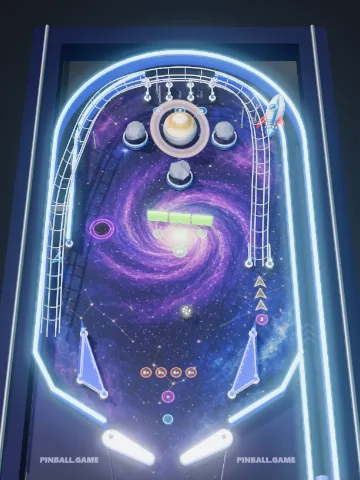 Space MissionFuel the rocket, open the black hole, orbit the planet.
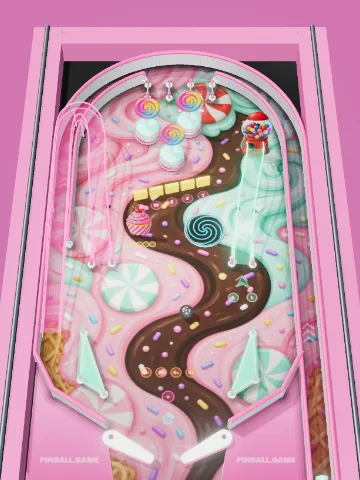 Candy CarnivalLollipop bumpers, a gumball machine and two candy ramps.
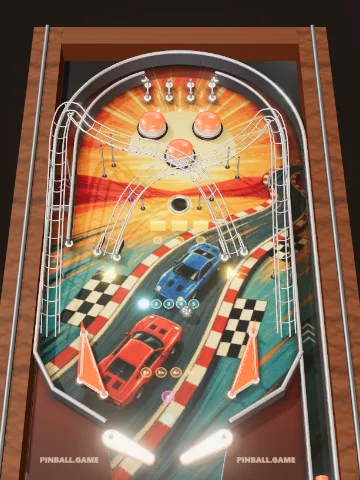 Grand PrixA retro 80s racing table with two crossing wire ramps.
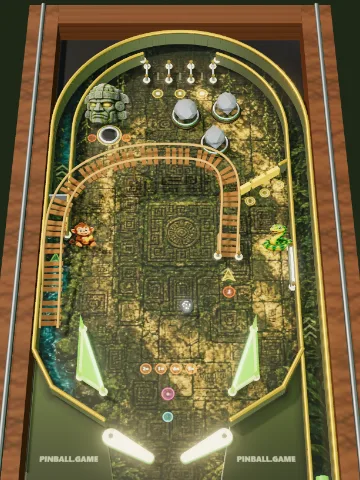 Jungle TempleA stone idol, a rope bridge, a snake and golden relics.
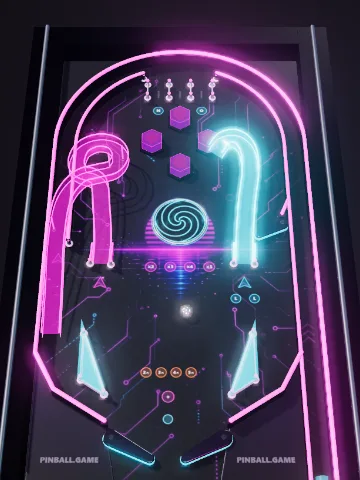 Neon RushGlowing spiral ramps, a vortex and ramp combos.
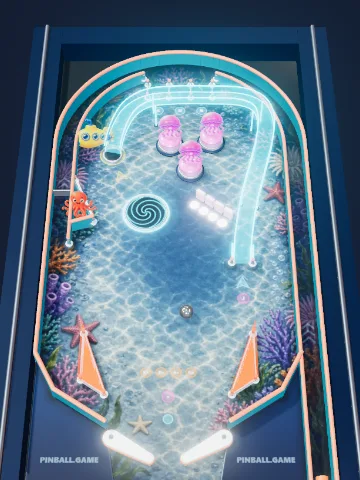 Deep SeaA yellow submarine, jellyfish, a whirlpool and an octopus.
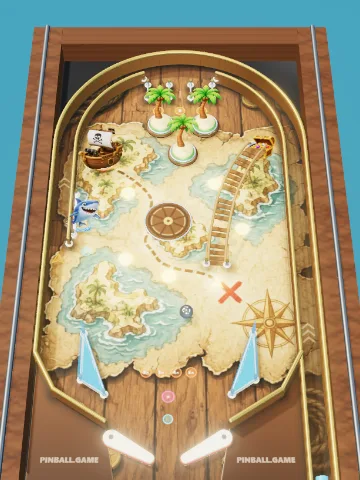 Treasure IslandA ship cannon, a rope ramp, a shark and gold coins.
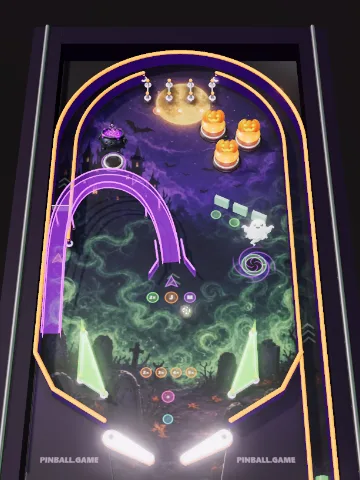 Haunted CastlePumpkin bumpers, a ghost train ramp and a witch's cauldron.
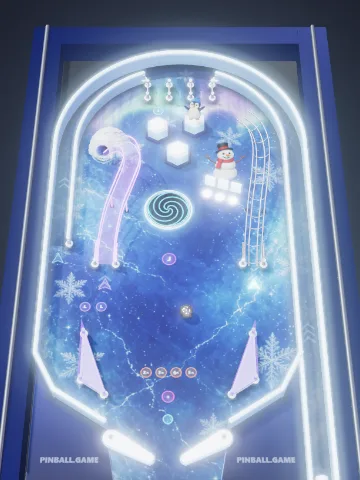 Ice KingdomA ski jump, a penguin slide, an igloo lock and a snowman.
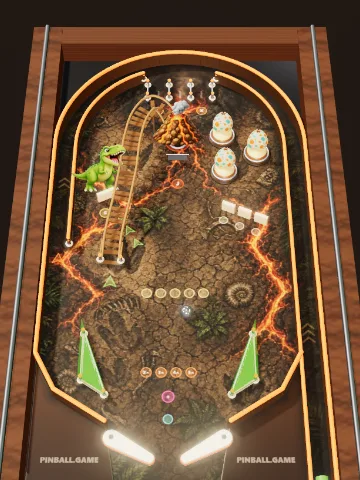 Dino ValleyDino eggs, a T-rex, fossils and an erupting volcano.
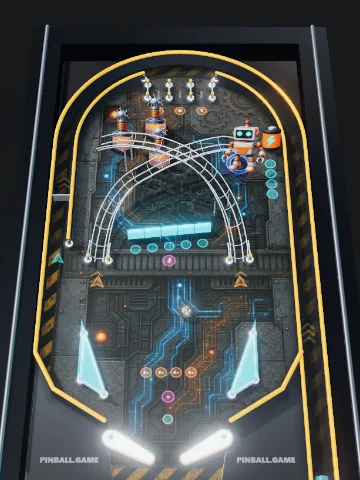 Robot FactoryBuild a robot, charge its battery and start the Overdrive multiball.
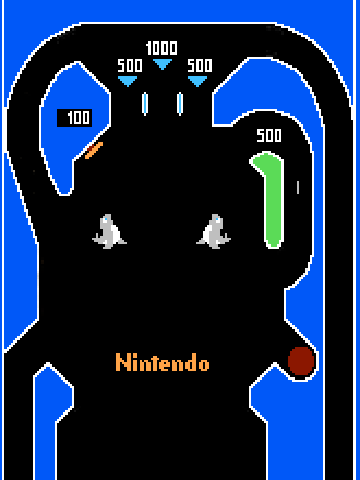 NES Pinball8-bit classic from 1984