How to Play Pinball
Pinball looks chaotic the first time you watch it, but the idea is simple: keep a steel ball on a sloping table for as long as you can and hit the right targets while it is there. This guide explains every part of the table, what the flippers can do and how a game is scored, so your first games last longer than a few seconds.
The goal of the game
A pinball table, or playfield, is tilted towards the player. Gravity pulls the ball down towards a gap between two flippers at the bottom. Your only tools are those flippers: each time the ball comes down, you flip it back up the table. When the ball falls past the flippers it is lost, which players call a drain. A game usually has three balls, and the aim is the highest score you can reach before the last one drains.
Points come from everything the ball touches, but the big scores come from shooting specific targets in the right order. Modern tables give you a goal to follow, often called a mission or a mode. Completing it starts multiball, opens a jackpot or raises the bonus multiplier.
The parts of a pinball table
- Plunger. The spring-loaded rod in the lane on the right. Pull it back and let go to launch the ball into play.
- Flippers. The two bats at the bottom. Some tables have a third, smaller flipper higher up.
- Slingshots. The triangular rubber bumpers just above the flippers. They kick the ball away sideways when it hits them.
- Pop bumpers. Round mushroom-shaped bumpers that fire the ball off in a random direction. They score small points quickly.
- Ramps. Raised tracks of plastic or wire. The ball needs speed to climb them and is returned to a flipper at the end.
- Orbits and loops. Lanes that carry the ball around the top of the table and back down the other side.
- Targets. Standup targets stay in place; drop targets fall into the playfield when hit and reset once a whole bank is down.
- Saucers and holes. Hollows that hold the ball for a moment and then kick it out, often starting a feature.
- Inlanes and outlanes. The lanes on each side above the flippers. Inlanes feed the ball back to a flipper; outlanes send it straight into the drain.
All of these terms, and many more, are explained in the pinball glossary.
Launching the ball
Every ball starts in the shooter lane. The further you pull the plunger back, the faster the ball enters the table. A full-power launch usually sends the ball around the top orbit; a softer one lets it fall into the lanes at the top. Many tables reward a precise launch with a skill shot.
On Pinball.game you hold Space (or hold your finger anywhere on the table) to pull the plunger and release to launch. The plunger meter beside the lane shows how much power you are building up.
Using the flippers
The most common beginner mistake is flipping too early and too often. Wait until the ball is actually on the flipper or just above it. A ball hit by the middle or the tip of a flipper flies up the table; a ball that bounces off a flipper that is already raised often drops straight down the middle.
You do not have to flip every time the ball comes down. Holding a flipper up lets the ball roll onto it and stop in the corner between the flipper and the wall. This is called a cradle or a trap, and it is the single most useful skill in pinball: with the ball stopped you can take your time and aim.
Remember that the flippers shoot across the table. The left flipper is the natural choice for shots on the right side, and the right flipper for the left side.
Keeping the ball in play
Balls are lost in two places: straight down the middle between the flippers, and down the outlanes on either side. You can reduce both by flipping a little later, by catching the ball instead of hitting it blindly, and by not raising both flippers at once, which opens a gap in the middle.
Many tables also have a ball save. For a few seconds after the launch, a drained ball is returned to you. On every Pinball.game table the ball save lasts ten seconds after the first launch of each ball and at the start of every multiball.
How scoring works
Each switch the ball touches adds points. During the ball, many features also add to a bonus that is counted when the ball drains, multiplied by the bonus multiplier. Reaching a set score can earn an extra ball. Multiball, where two or three balls are in play at once, is where the biggest points are: during multiball the main shots become jackpots. The pinball rules and scoring guide covers all of this in detail.
Your first games on Pinball.game
Start with Space Mission. Its rocket ramp on the right is wide and easy to reach from the left flipper, and the mission panel above the table tells you what to shoot next. When you are comfortable, try the crossing ramps of Grand Prix, the combos of Neon Rush or the cannon and treasure chest of Treasure Island.
Ready to go further? The pinball tips and tricks page explains the cradle, the post pass and other flipper skills that experienced players use.
Play pinball now
Put the theory into practice on one of our 11 free tables. They run in the browser on a computer, a phone or a tablet.
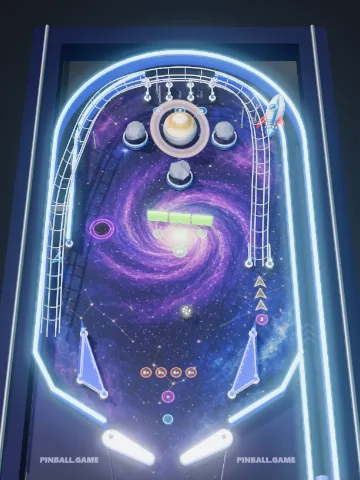 Space MissionFuel the rocket, open the black hole, orbit the planet.
 Candy CarnivalLollipop bumpers, a gumball machine and two candy ramps.
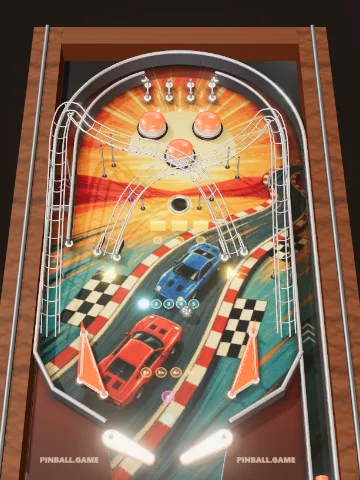 Grand PrixA retro 80s racing table with two crossing wire ramps.
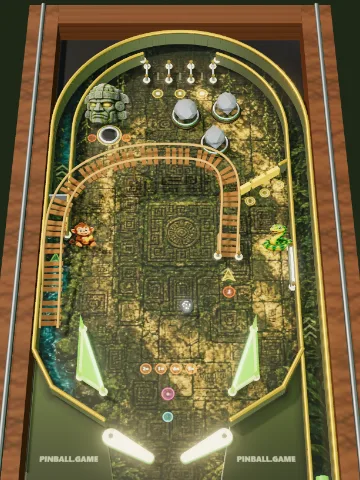 Jungle TempleA stone idol, a rope bridge, a snake and golden relics.
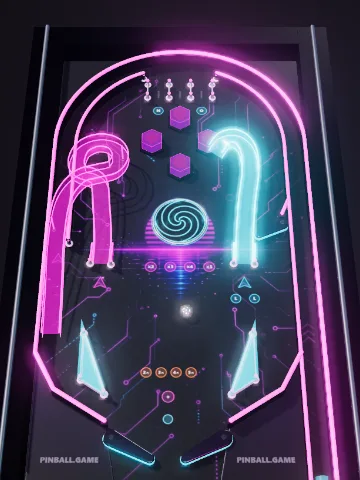 Neon RushGlowing spiral ramps, a vortex and ramp combos.
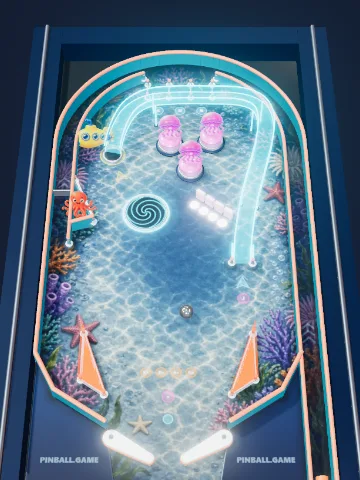 Deep SeaA yellow submarine, jellyfish, a whirlpool and an octopus.
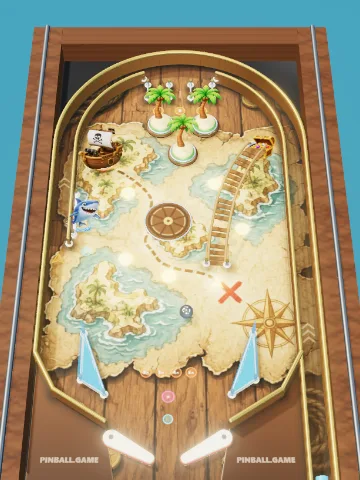 Treasure IslandA ship cannon, a rope ramp, a shark and gold coins.
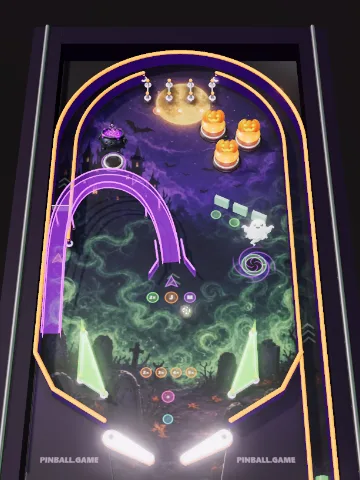 Haunted CastlePumpkin bumpers, a ghost train ramp and a witch's cauldron.
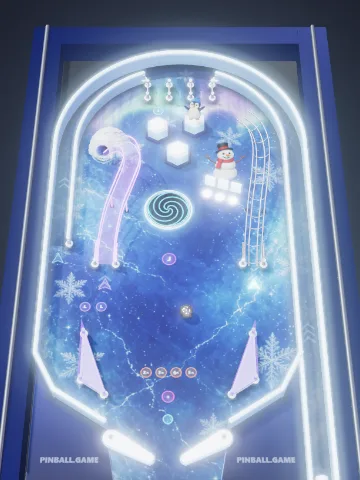 Ice KingdomA ski jump, a penguin slide, an igloo lock and a snowman.
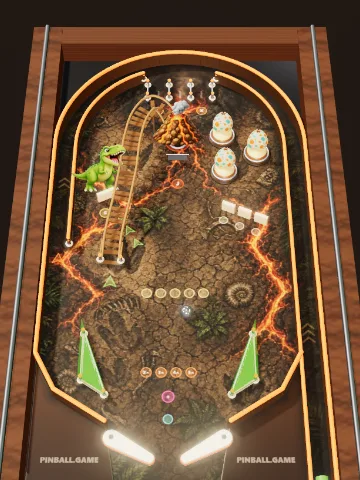 Dino ValleyDino eggs, a T-rex, fossils and an erupting volcano.
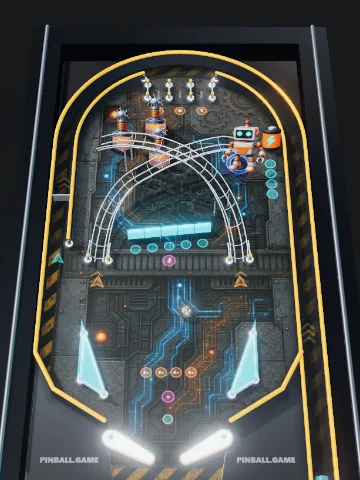 Robot FactoryBuild a robot, charge its battery and start the Overdrive multiball.
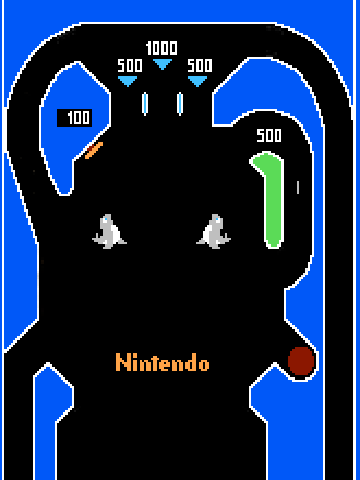 NES Pinball8-bit classic from 1984